Diffusing a User-centered Ecosystem Approach to Sustainable Livelihood Promotion
The SELCO Foundation, established by Harish Hande in 2010, focuses on providing decentralized renewable energy (DRE) solutions to rural, impoverished communities, emphasizing a user-centered, ecosystem-based approach. The Foundation aims to integrate sustainable energy solutions within the daily lives and activities of users through comprehensive support structures, involving technical, financial, and community partnerships.
SELCO's methodology is characterized by a design-thinking approach that considers the entire ecosystem surrounding the end-user. This involves understanding user needs, developing customized devices, securing appropriate financing, and ensuring maintenance and support through local networks. The Foundation works closely with rural households, small technical enterprises, financial institutions, and community organizations to pilot and scale interventions, creating what Hande terms "Lego Blocks" of innovation that can be adapted by other development organizations globally.
Despite its innovative model, the SELCO Foundation faces several challenges in diffusing its approach to other organizations. One significant challenge is the fragmented and often outdated support ecosystems in under-developed regions, such as India’s Northeast. Often, SELCO must incubate new support organizations rather than merely aligning existing ones, complicating project scopes, especially in regions lacking the necessary ecosystem components entirely.
Cultural and geographical specificity presents another difficulty, requiring tailored interventions unique to each region. What works in one area may not be directly replicable elsewhere, complicating diffusion efforts. Financially, other organizations may find that securing patient, long-term funding to support iterative, ecosystem-building approach is difficult, as traditional funders often prioritize immediate results.
Introduction
While the development community initially doubted the notion of a viable business model for solar energy for the rural poor, the idea had gained many supporters by the 2000s. Solar energy, after all, seemed to offer a sustainable option to enhance rural development. Independent of unreliable grids or polluting generators, solar power could provide residential and commercial lighting, as well as power simple devices. And yet, numerous solar projects languished, others were abandoned, as the business model seemed to fail to deliver on its promise.
Though a long-time advocate of sustainable and Decentralized Renewable Energy (DRE) for the poor, Harish Hande was not surprised by how some large-scale efforts to deploy solar in development had gone awry. He founded SELCO India, a for-profit company, in 1995 and learned that introducing solar meant more than delivering a panel and a battery. Especially for the poor, solar had to come with an appropriate plan for financing and maintaining the apparatuses. Devices to be powered by solar had to be adapted to the output of the panels and there had to be demand for the services or merchandise produced. In short, an entire ecosystem had to be mobilized to support a DRE intervention.
Hande founded the SELCO Foundation (SF) to apply the insights gained at SELCO India to the problems of development writ large. In contrast to those who began with the objective of deploying as many solar panels as possible, SF stressed the importance of designing a system with the end user and their supporting ecosystem in mind. The Foundation worked with rural households, small technical organizations, financial institutions, and community organizations to test, pilot and scale particular interventions. For Hande, SF’s goal was not just to create various DRE solutions, but also to promote design thinking among development organizations and to provide what Hande described as “Lego Blocks” that others could put into place for their own development initiatives throughout the world. SF worked in many locales in India, but the Foundation targeted India’s rugged Northeast states as a test bed that could offer an instructive set of lessons.
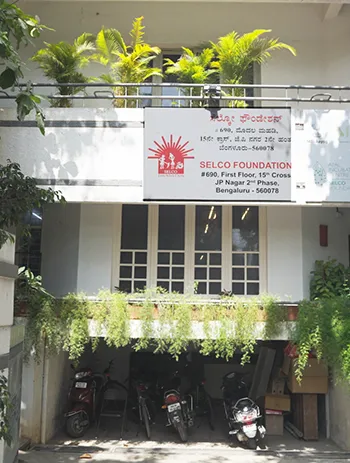
Selco Foundation Headquarters in Bengaluru
While SF worked in many facets of development (e.g. health, education), the Foundation’s work on livelihood promotion presented an especially thorny set of challenges to their design approach – issues that needed to be solved in order to diffuse their methods to other organizations. SF’s experiences in the Northeast showed that the existing ecosystem to support microenterprises in a region could be disconnected, antiquated, and resistant to change. Therefore, rather than simply aligning civil society and technical organizations, the Foundation had to incubate support organizations so that they could in turn help microentrepreneurs.
The requisite complexity in the scope of projects would be an even more acute problem outside of India. Foundation staff recognized that taken-for-granted ecosystem pieces in India could be absent in other locations. The issue would be less of bridging gaps between existing entities but creating organizations and resources de novo. This represented a tall order for anyone trying to emulate SF’s approach - How would a designer of an intervention define a feasible scope for a given intervention?
Furthermore, to a greater extent than other verticals, livelihood promotion was culturally and geographically specific. SF faced the challenge of translating the experiences of the microenterprises it seeded in one region in India with a different set of livelihoods that were present in other parts of the country and of the world. What of SF’s experiences could be communicated with other development and DRE organizations?
Furthermore, other NGOs considered SF a special case as the Foundation had committed funders willing to look at the long-term progress of SF’s interventions holistically over time. More traditional funders and NGOs relied on narrower, short-term output metrics to measure progress. Should SF try systematizing the ecosystem approach and develop useful yardsticks to evaluate success, with an eye toward shifting how more traditional funders and NGOs approached development? If so, what might those metrics be?
The SELCO Way
Harish Hande established the SELCO Foundation (SF) in 2010 to provide solar energy aimed at improving the lives of households at the base of the income pyramid. Hande was not alone; other governmental and NGO organization had launched efforts to provide decentralized renewable energy (DRE). Unfortunately, many of these other attempts had run into problems. According to various reports, solar mini grids and other solar devices across rural India and Africa had been abandoned or fallen into disuse.1 Hande believed that these efforts suffered from taking a “product-centered” approach, focusing on placing as many DRE solutions as possible without integrating the devices into the lives of the people they hoped to serve. In contrast, SF had developed a methodology that put users at the center of an intervention and marshalled an ecosystem to support each intervention.
Hande had gained his insights into making solar useful through more than a decade of work in DRE. In 1995, before solar came into vogue, Hande had established SELCO India, a for-profit company that supplied and installed solar panels, batteries, and lighting systems. The company focused on the needs of end-users, designing ways that everyone from street vendors to midwives could utilize solar lighting for their lives and livelihoods. It took about six years for the company to break even and build a stable capital stack. By 2005, the company had reached about half a million people by electrifying more than 80,000 households, micro-enterprises, and community facilities, making it one of the largest solar panel providers in the world.
With SELCO India established around the company’s headquarters in Bengaluru, Hande’s vision of what could be done in sustainable development expanded. He had become frustrated with the efforts that NGOs and governments had made in the DRE space. Hande contended that the poor themselves could provide direction as to how DRE could be best utilized in their daily affairs. But because people at the base of the income pyramid could not speak English and put together a PowerPoint presentation, their insights and innovations were generally ignored. So, Hande started the SELCO Foundation to promote DRE interventions that considered the needs and ingenuity of the rural poor. Hande eventually left SELCO India to focus his efforts on SF, which works independently of SELCO India on most its interventions.
While the DRE solutions SF devised were important, Hande believed that the Foundation’s primary contribution was the design thinking that the Foundation brought to creating interventions. The SF team acted as system designers – looking to understand user problems and innovate solutions that went beyond customary business models. Hande argued that conventional development efforts could be too siloed – with interventions that drew from a narrow range of possible alternatives. SF looked to gain a fundamental understanding of a user’s problem and then consider the entire ecosystem required to operate and sustain a particular enterprise. It was this approach that Hande hoped to impart in the people and organizations working in development. Eventually, Hande hoped that SF would work itself out of business as the more holistic approach it favored became the norm.
The User and their Ecosystem
The SF approach began with understanding the needs of its end-user rather than coming in as experts in a particular technology. Hande noted, “We need to think why a person demands electricity. When it comes to power, it is always talked about from a supply side — how many MWs [megawatts] of solar has been put up — and never from the demand side.”
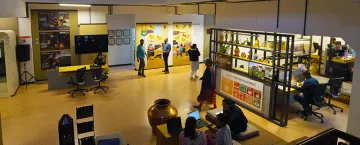
The lobby of the SELCO Foundation's headquarters in Bengaluru, India.
User-centered product development, a fundamental tenet to design thinking, taps into age-old wisdom about consumer preferences. Decades ago, Harvard Business School marketing professor Theodore Levitt observed “sell the hole, not the drill,” arguing “people don’t want to buy a quarter-inch drill; they want a quarter-inch hole.”2Though this wisdom is often forgotten by product designers, Hande believed that examining DRE from the user’s perspective would yield better, more appropriate designs.
It was at Hande’s first venture, SELCO India, that he discovered how important it was to tailor the design of the product to the requirements of the user. For example, the SELCO India team examined how night street vendors used light. They realized that the vendors didn’t have the capital to buy batteries to power the solar lights that the company hoped to sell them. However, they could rent a battery for a night with the cash flow from their sales, if the price was less than the kerosene they would use for their lamps. So SELCO recruited a team of solar entrepreneurs who bought batteries and lights, powered them during the day from solar panels, delivered the lights to the street vendors for the night, and used the rental fees to pay-off the loans on the batteries and generate a profitable livelihood. In a situation that might have led others to conclude that solar energy could not provide a solution, SELCO India found a way not only to help the street vendors with a cleaner source of light, but also to create a new layer of successful entrepreneurs.
SF’s approach to user-centered design encompassed more than the physical design of the product. To make an intervention work, SF designers believed that they had to not just adjust the technology but also consider a user’s entire ecosystem, potentially transforming business models, supply chains, and financing.3 For example, solar panels and the devices they were meant to power required regular maintenance. Many times, even a minor interruption would spell the end of a particular DRE intervention. So, designers needed to figure out who would maintain the systems over time. Other aspects of a user’s social world needed to be marshalled as well. Who would train the microenterprise owners to use new devices and equipment? Who would finance the purchase or rental of the equipment? If the new devices increased efficiency, to whom could the microenterprise sell their increased production?
SF believed answering questions such as these was as important to the success of an intervention as the physical design of the product. SF codified their philosophy into ‘five pillars’ that would anchor their design work:
Innovation - People looking to employ solar solutions required devices tailored to their needs and the capacity of DRE. Encouraging innovation took many forms, from incubating new technologies by talented inventors to benchmarking and certifying existing products.
Finance - The available capital and cash flows of poor households made buying new devices difficult with conventional financing schemes. SF sought to match the financing for a device to a microenterprise’s cash flows, working with financial institutions to create context-specific and customized financial products.
Skill and Capacity Building – The ability for a community to both operate unfamiliar devices and incorporate new routines was limited. SF sought to build educational opportunities and enhance the human capital in the areas it served, creating curricula, and encouraging exchanges among grassroots innovators.
Backward and Forward Linkages – New devices increased production and therefore needed robust linkages to raw materials and increased markets. SF worked with local organizations to design programs that would extend the reach of the microenterprises served by the devices it promoted.
Policy – To scale innovations, SF needed attention from government and social sector funders to help facilitate replication. The hope was that key policymakers would adopt approaches that would be conducive to the user-centric ecosystem approach.
Levitt expanded on this insight in “Marketing Myopia”, an article in the Harvard Business Review noting, “The view that an industry is a customer-satisfying process, not a goods-producing process, is vital for all businesspeople to understand. An industry begins with the customer and his or her needs, not with a patent, a raw material, or a selling skill. Given the customer’s needs, the industry develops backwards, first concerning itself with the physical delivery of customer satisfactions. Then it moves back further to creating the things by which these satisfactions are in part achieved. How these materials are created is a matter of indifference to the customer, hence the particular form of manufacturing, processing, or what have you cannot be considered as a vital aspect of the industry…The irony of some industries oriented toward technical research and development is that the scientists who occupy the high executive positions are totally unscientific when it comes to defining their companies’ overall needs and purposes. They violate the first two rules of the scientific method: being aware of and defining their companies’ problems and then developing testable hypotheses about solving them. They are scientific only about the convenient things, such as laboratory and product experiments.”
The concept of ‘ecosystem’ and ‘value chain’ share similarities, but also important differences. A value chain describes the entire process through which raw materials become finished products. A microenterprise’s ecosystem, on the other hand, describes the support services required to allow a microenterprise (which generally represents only a single link in the value chain) to function, including immediate inputs and outputs.
Organizing the Foundation
Finding Funders
The SELCO Foundation was fortunate to begin operation at a time that international development and sustainability goals were merging, bringing new interest by private and government entities to efforts providing DRE solutions in development efforts.
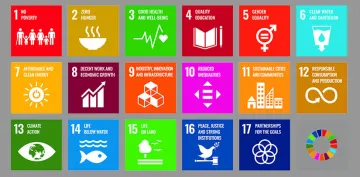
The most visible impetus came from the United Nations Sustainable Development Goals (SDGs). In the 1990s, the United Nations had sponsored conferences concerning children, nutrition, human rights, and women to gain coordinated action on these issues among countries. These meetings led to the proclamation of eight Millenium Development Goals to be achieved by 2015. A separate set of UN conferences had been held concerning the environment. At the Rio Summit in 2012, world leaders decided to marry the two streams of work to create a unified set of aspirations aimed at providing long-term development that respected the environment. The UN’s SDGs became an international standard that influenced the efforts of governments, businesses, and the non-profit sector.
The SDGs aligned closely with the SF’s manifold aspirations, making the new organization an attractive partner for a variety of entities. Funders were also drawn to Hande’s reputation. His work at SELCO India had attracted widespread attention and he had been awarded numerous prizes for his efforts.
Nonetheless, SF’s approach required time and Hande looked to attract patient funders that would allow the new organization to develop its methodology based on trial and (inevitable) error. The Lemelson Foundation, a foundation that had helped capitalize SELCO India, stepped forward to provide initial funding for SF. Additional funds came through a variety of sources in India and internationally. In time, as SF’s interventions started to work, other funders came to support the enterprise. Moreover, the Foundation developed a reputation of being a thought leader on issues of user-designed, sustainable development.
The United Nation's 17 Sustainable Development Goals - many of which aligned with the SELCO foundation's mission.
Staffing Challenges
Early on in its growth, SF faced human resource challenges. The Foundation initially employed specialists in DRE or people with experience in specific functional areas such as health or agriculture. Many had done previous work in development. Hande thought that these people would come to adopt SF’s more expansive definition of interventions. However, many of these hires proved uncomfortable working with SF’s broad-based view of user-centered, ecosystem interventions. Hande noted, “I think the way we chose people led to project-based thinking rather than an ecosystem-based thinking… The education system, unfortunately, teaches everybody, everything in silos.”
To build the kind of ecosystem approach he favored, the organization began hiring people from varied backgrounds who were more practiced and comfortable with system thinking and looking at a problem through a number of lenses simultaneously. Hande contended, “Our interventions had to be crosscutting, whether you crosscut between finance, technology, architecture, business modeling, you could not be an expert of one but master of everything. We wanted to get away from project-based, program-based thinking and find people could think at a systems level.” The Foundation began to look for and find hires from a variety of backgrounds such as architects, social workers, designers, and engineers; individuals who would embrace the complexity of the Foundation’s interventions. Finding the right people remained a persistent challenge. Nonetheless, by 2023, the Foundation employed over 150 people.
Organizing the Work
The user-centered, ecosystem approach to DRE could be employed in a number of different areas. To organize its efforts, SF defined four ‘verticals’ - Livelihood Promotion, Healthcare, Education, Household & Community Wellbeing. These verticals allowed the Foundation to build domain-specific knowledge within important areas for development. The Livelihood Promotion vertical was further differentiated among the various types of microenterprises in which the Foundation would pursue interventions: Agriculture, Animal Husbandry, Micro-Businesses, Crafts and Textile, and Cooling. Mapped onto these verticals were Foundation staff who became regional experts with knowledge of local institutions and organizations that would be useful in ecosystem building.
Promoting Livelihoods
As Hande and other SELCO Foundation staffers acknowledged, the goal of helping the rural poor secure better livelihoods represented a different kind of challenge than that of bringing DRE solutions to healthcare or education. For education and healthcare, successful innovations were focused on facilities (schools and clinics) that could be structured in a similar fashion no matter where they were found. On the other hand, livelihoods differed from one village to the next and even within a village from one household to the next. Livelihood promotion required designers to pay very close attention to village life and household dynamics.
The word ‘livelihood’ is not much used in developed market economies. One speaks of ‘jobs’ or ‘businesses’ rather than the more all-encompassing idea of a livelihood. The market economy has created sharp boundaries between various spheres of activities. One’s job or business provides an individual with money that the individual then uses to purchase those items needed to sustain themselves. And for policy makers in developed economies whose goal is to improve the material condition of people’s lives, the objective tends to be increasing the number of jobs, enhancing the conditions of employment, or simplifying an individual’s ability to start a business.
However, livelihoods in a developing economy, especially among the poor, represent a far more complex portfolio of activities. Wage or business income may be one source of money to buy goods, but most households engage in other activities to further their economic condition. Members of the household often produce subsistence goods for themselves first, with livelihood activities that generate income in the market a secondary consideration. A SF field worker observes,
There is income diversification in the villages. Households farm vegetables, as well as raise poultry and pigs both for their own sustenance and for sale. When we approach them, we find out what income is generated out of these different livelihood activities. And from this, we can see if a particular solution will help enhance the income that they're earning, especially considering the other livelihood activities that they have.
Enhancing livelihoods often meant discovering ways to utilize otherwise unproductive time
Designing an intervention to enhance a portfolio of livelihood activities represented a challenge and an opportunity. With a limited number of hours in a day, activities impinge on one another. Time spent processing rice is time that is not available for mending clothes. On the other hand, the great variety of tasks, while exhausting, can also provide some diversification and stability. If one household enterprise fails for unforeseen reasons, other activities can make up some of the deficit.
In designing a DRE intervention, SF had to be mindful of the interrelated nature of the various economic activities and their consequences for household income. Ideally, an intervention would make use of a household’s available labor and resources, utilizing otherwise less productive time or assets. An intervention could lead directly to earned income or it could free up time that would allow members of the household to pursue activities that would produce income. In addition, an intervention might have a health benefit, reducing illness and toil and thereby increasing energy to do other things.
Conversely, even an income-generating activity could negatively affect a household, tying up time or capital that could be used on other activities. Hande remembered one intervention the Foundation tested with a solar-powered press that made cooking oil. The machine worked as expected, but the time required to operate the machine and the rate of return it generated could not compensate for the lost time spent doing other activities. While the device ‘succeeded’, the intervention left the households worse off than they were before.
Villagers, themselves, proved to be the best guides for designing interventions. Hande observed that household microentrepreneurs were innately aware of the ecosystem in which they operated. They built up considerable knowledge about the best ways to procure resources, produce products, and sell their goods. The Foundation had to harness these insights as it mapped potential DRE interventions.
The payoffs for success could extend beyond its user. While interventions were targeted at a single household, an intervention that promoted the livelihood of one household could also have spill-over effects, improving the livelihoods of other households in the village. For example, if one household installed and operated an electric rice-hulling machine, other households could, for a fee, run their paddy rice through the mill for dehusking and cleaning. This would free other households of this backbreaking, time-consuming labor, and allow them to engage in other activities.
The Northeast
To test its approach, the SELCO Foundation sought challenging environments. SF had begun its work around its home base in Bengaluru in India’s relatively well-developed south. However, the Foundation soon began to branch out to other parts of India, particularly India’s Northeastern states. The Northeast encompassed a diverse geography and demography area that was historically underdeveloped. The Foundation reasoned that if interventions could go to scale in the Northeast, they could be applicable in a wide variety of locales – in India and beyond.
For most Indians, the Northeast represented a distant and unchartered region. The Northeast consisted of seven states (often called the seven sisters) of Assam, Arunachal Pradesh, Manipur, Meghalaya, Mizoram, Nagaland and Tripura.1The region was physically connected to the rest of India through a narrow, 22-kilometer-wide land corridor that ran between Bangladesh and Nepal, a strip of land known as ‘the chicken neck’. Ninety-two percent of the region bordered on foreign countries (China, Myanmar, Bhutan, Bangladesh) and there was no outlet to the sea – the closest Indian port was Kolkata, more than 1,500 kilometers overland through India. In the past, the region was frequently referred to as the frontier – geopolitically strategic, but remote from much of regular Indian life.
Internally, the region was difficult to traverse, the road system was underdeveloped, and those roads that had been built were generally poorly maintained in the face of a challenging climate. The major natural feature of the region is the Brahmaputra River that carried away the melt from the Himalayas and excess water from the region’s high rainfall. The river and its tributaries flooded annually, bringing fertile soils to farmlands. But regularly, the floods exceeded the nearby plains and engulfed villages and roadways. The flatlands around the Brahmaputra were surrounded on all sides by hilly terrain (the foothills of the Himalayas) that constituted about two-thirds of the area. The region’s rain patterns, combined with the terrain, meant that landslides were a frequent occurrence, further complicating life and travel in the region.
The demanding geography of the Northeast fed into the separation among the various demographic groups that lived there. The region was home to 46 million people who spoke 220+ languages. The area also was home to over two-thirds of India’s “scheduled tribes,” ethnic groups that are designated by the government the most disadvantaged socially and economically. The variety of ethnic groups meant that inhabitants, even those that were geographically close, could have significantly different cultural practices and expectations.
In terms of resources, the region had many natural assets. The Northeast featured deposits of various fossil fuels including coal, natural gas, and oil. Assam was the home for a significant tea industry whose products were exported throughout the world. The rain and soil combined for horticultural plenty -- pineapples, oranges, kiwis, bananas, and apples were all grown in the region. Spices such as turmeric, ginger, and cardamom proved to be cash crops for farmers. A particular type of silkworm that creates cocoons that can be spun into a dense, yet breathable silk fabric (Eri silk) was exclusive to the region. Staples and legumes were grown in the flatlands for sustenance.
Economically, the region bore the results of previous enterprises that placed heavy investment in the extractive and plantation sector and produced few linkages, backward or forward, to rest of the economy of the country or other parts of the Northeast.2 With few large-scale manufacturing or service employers, a vast proportion of the population worked in the informal sector of the economy. Banks and other financial institutions were sparse across the region, leading to a high rate of unbanked inhabitants. Literacy rates were in line with the rest of India, but the region lacked institutions of higher learning or vocational training, forcing the ambitious to leave the region to receive advanced training. While GDP had grown during the period before the pandemic, growth rates in the region lagged behind the rest of India, resulting in the Northeast contributing an even smaller share of the nation’s economy.
Sreeradha Datta, “What Ails the Northeast: An Enquiry Into The Economic Factors”, Strategic Analysis, April 2001.
Design Research
The design thinking that the SELCO foundation practiced for livelihood promotion interventions required prototyping and frequent iterations. But the Foundation started with extensive research before undertaking a project, centered on two questions:
How can an intervention improve a household’s income?
What do households need to sustain an intervention for the long-term?
An attempt to answer the first question was satisfied by creating a ‘problem statement’ that served to guide the technical development of devices and DRE power sources. Investigating the second question led to an ‘ecosystem map’ that identified the functional requirements of maintaining the enterprise over time and began to identify partners that might fulfill these requirements.
Problem Statement
The problem statement aimed to look at a proposed intervention from the perspective of the intended user. Creating problem statements required a journey of discovery for SF staff. Working with poor households, field workers would examine every aspect of daily life, looking for ways that labor could be made more efficient. Besides understanding how a household budgeted its time, the staff would consider the aspirations of its end-users and the potential any device had for enhancing income.
As designs were considered and altered, staff would return to the problem statement to assess if the intervention continued to address the needs of the user. A well-considered problem statement provided discipline and pushed Foundation staff to consider alternatives to the usual way of doing things – especially as it made DRE more practical. Hande notes,
Considering demand is important as it pushes efficiency. For instance, if electricity is needed for a sewing machine, how efficient is the machine? What will it sew? How many hours will it be used? You do not raise fundamental questions about the technology if you focus only on the amount of electricity that existing machines need.
The problem statement could include:
A short statement of a present condition (e.g. farmers currently have to use a dheki, or thresher, and lots of manual energy to dehull rice).
The consequences of this situation (e.g. farmers spend hours dehulling rice and expend considerable tedious labor).
Possible solution(s) (e.g. a DRE powered electric dehuller).
Income opportunity (e.g. charging local rice farmers to dehull their harvests).
At SF, the problem statements pushed the decentralized nature of solar energy to its logical end. SF wanted ownership of devices to be as close as possible to the users of the technology – an approach that differed from many other designers of DRE interventions.[1 SF believed that ownership of the devices by the users was important to making the interventions work. As owners, the users would become invested in the solution, unwilling to walk away if problems arose. On the other hand, the degree of willingness of a household to invest in a particular device was evidence of the correctness of the Foundation’s understanding of their problem.
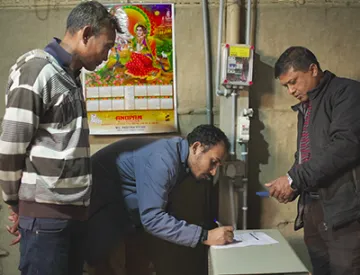
Constructing a problem statement and building an ecosystem map required field work in remote villages.
Ecosystem Mapping
A problem statement could only map out the technical requirements of a DRE solution. Even with the proper technical design, users needed assistance for training, financing, maintenance, and outlets for selling increased production. For SF, this meant that a successful intervention needed to be rooted in a supporting system of organizations that provided needed functional inputs. Creating a map of the ecosystem, therefore, was a crucial part of any intervention.
There were two aspects of an ecosystem map. The first was consideration of the functional inputs and outputs for a given intervention. What requirements would a given intervention entail? What inputs would a microenterprise require? Where might an enterprise sell its increased output?
The second part of an ecosystem map was determining how these functional requirements could be met given the current array of services in a user’s region. SF then worked to partner with the organizations in a given region to arrange for these services. The partners could range in their readiness to support an intervention. Some enthusiastically became partners when they were informed of an intervention. More often than not, existing organizations were not properly set up to provide support for new technologies or were dubious of new approaches. Therefore, SF’s ecosystem mapping presented a “gap analysis,” in which SF designers specified how existing organizations might need to adapt in order to play a crucial supporting role in the forming ecosystem. Gap analysis also helped identify places where no existing organizations could fulfill the functions necessary. To fill these gaps, SF would sometimes incubate organizations or help existing organizations build new capacities. Other gaps could be filled through government programs.
Building partner relationships required patience. Besides assessing inclination and willingness, SF had to develop the organizational capacity of a partner to meet the needs of users, an important consideration when the organizational partners were new or small. But the effort was crucial for the long-term success of an intervention. Partner organizations brought alternative perspectives on an intervention that could improve a design. These organizations also brought insights into solving problems during the pilot and testing phases of an intervention. Most importantly, the partner organizations would be critical to preserving an intervention once it scaled. These partner organizations animate an ecosystem that might even produce further innovations.
The solar micro-grids that other groups had installed across India and Africa were often driven by an effort to recreate the structure of a utility; most grids were owned by companies or government agencies who then charged for the power.
Technical Partners
Identifying and partnering with technical enterprises was a key element in any intervention as the SELCO Foundation did not manufacture or sell any devices. Two types of devices were required in DRE-powered livelihood promotion: electric-powered machines that perform tasks more effectively and solar energy set-ups that provide electricity for those machines.
Besides its own ecosystem map, SF relies on community partners to steer them to the best enterprises serving a locality. Rachita Misra, SF’s Associate Director, Knowledge & Outreach, notes,
They are able to tell us, "If you want to do something super innovative, go to this guy, because he's really entrepreneurial. He will speak to you openly. Don't go to that person. That person is too far away. His business is generally not in a good condition.” These local community partners help with strategic decisions.
While the technical aspects of building devices were important, the technical partners played other roles in making an intervention work. For marketing, technical enterprises could convince reluctant householders to purchase. For maintenance and support, the technical enterprises had the greatest know-how and are in the best position to troubleshoot problems and address them, such as ordering and installing spare parts should the need arise.1
Solar Energy Set-Ups
Service calls are a crucial element in keeping devices up and running.
Initially in the Northeast, SF concentrated on identifying and partnering with entrepreneurs who provided solar panels. These businesses focused on bridging the last mile between the manufacturers of solar equipment and the microenterprise. These solar panel entrepreneurs sourced the equipment, configured the system, and installed the devices. Though the technology is well-understood at this point, a solar panel power source, nonetheless, is not simple to connect. A solar system consisted of a number of components – the panels that convert sunlight into DC electricity, an inverter that converts the DC current to AC to power machines, and a rechargeable battery. All these had to be transported to the distant areas where the customers lived and then properly joined and situated to be usable.
For customers, the irregularity of the electrical grid represented the greatest purchase incentive for solar panels and connections. Householders knew that grid electricity would likely only be available a few hours a day or even be out for days at a time. But previous merchants had muddied the waters. Suppliers had sold inferior solar panels, much cheaper but unreliable, and provided little support when things went wrong.
Solar-Powered Devices
Once a critical mass of entrepreneurs who could provide solar set-ups was established in the Northeast, SF turned to working with enterprises that provided technologies to enhance livelihoods. Jaffer recounts,
From 2012 to about 2020, we were more focused on assisting clean energy enterprises. We’ve incubated nearly 70 enterprises since 2012, and we believe there are enough clean energy last-mile enterprises in the region. So, we don’t need to keep incubating. Around 2020, we started onboarding more technology-based enterprises.
A key element was ensuring that a given machine meshed with the amount of power that a solar panel could provide. Early on in its efforts, SELCO India found that off-the-shelf machines assumed connection to the grid and might not work with a solar set-up. These machines often included features that were unnecessary to the small livelihoods that SELCO was seeking to support. For example, SELCO India discovered that seamstresses could not use solar energy because standard sewing machines required more electricity than solar could provide. However further investigation revealed that the machines were overpowered for the light fabrics and types of stitching those Indian seamstresses used. When appropriate sewing machines were sourced, they could be run by solar power.
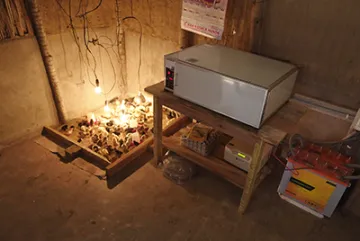
Other technical aspects had to be suited microenterprise requirements. For example, sometimes off-the-shelf offerings for a particular technology did not allow operators to manufacture in appropriate quantities that would sustain a microenterprise. Egg incubator manufacturers might offer a model that allowed incubating ten eggs at a time, not enough to sustain an enterprise. But the next largest model might have a capacity of 500 eggs, far more than a microenterprise could support. A 50-egg incubator might be just the right size to start a chicken-raising operation and then offer the possibility of additional units should demand increase – but often these mid-level technologies were not readily available.
DRE-powered devices need to be an an appropriate size for a microenterprise.
SF approached these device manufacturers in various stages of development. Sometimes, a technical enterprise had a technical solution ready to go. In this case, SF worked with the enterprise to certify the technology and then connect the manufacturer with households and businesses looking for that kind of machine. Jaffer says, “We work with them, connect them to the people who are going to be using that technology so that they can validate it, give the right feedback, get them the right money, and otherwise help them grow.”
Other would-be technical entrepreneurs do not have market-ready equipment to meet a particular livelihood need but were interested in developing such products. For these entrepreneurs, SF could incubate their businesses, providing funding and guidance. The Foundation helped with market research, both of the existing landscape of technical alternatives and of the enterprise’s intended consumers. The Foundation’s incubation efforts were generally limited to two years, though sometimes SF supports these endeavors beyond this period. In other instances, SF offered innovation contracts to clever tinkerers to build new machines according to the Foundation’s specifications. The design of the resulting device belonged to SF which they offer to local technical enterprises to serve as the basis of their business.
Altogether in 2023, SF’s efforts to identify and develop machines that enhanced livelihood operations had yielded a catalog of some 175 that could be used in conjunction with solar power.
Nonetheless, maintenance does place an enormous burden on the technical enterprises. The locations of the installations are widely dispersed in inaccessible areas. Building a maintenance force to service such a far-flung customer base can be expensive. Working through their community partners, SF has also encouraged creating third-party maintenance forces made-up of part time workers to try to fill the gap.
Community Partners
The SELCO Foundation did not have experience in the Northeast when they decided to make the region a testbed for their ideas on user-centered, ecosystem-based design. They entered as strangers in an environment where people had longstanding relationships with one another and followed traditions that were often opaque to outsiders. The Foundation realized that to be effective in helping rural households build livelihoods, they would need partners with local connections and knowledge.
Over time, SF built a partner network of 10-12 grassroots level civic organizations in the Northeast with whom they shared goals of livelihood promotion. Huda Jaffer, a SF Director, notes,
In most cases, these grassroots-level civil society bodies or smaller NGOs with which we work don't come with technical expertise. They represent the community. We look to build on their understanding of the community and their ability to mobilize, create awareness, and do outreach. These organizations complement the expertise that we have in ecosystem thinking, clean energy, and technology.
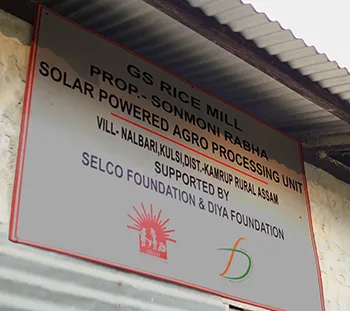
The SELCO Foundation partnered with Diya to promote DRE interventions in villages of the Northeast.
The organizations tended to be smaller NGOs. Most were too small to gain funding from larger foundations, so support from SF was greatly appreciated. These organizations provided a crucial link from system-level analysis and to local community action.
For example, SF partnered with the Diya Foundation, a group that did work in both Assam and Meghalaya. Besides rural livelihoods, Diya’s 22 full-time staff also focused on health and education.
Diya’s approach to rural development mirrored that of other small community NGOs. In the districts in which Diya operated, they identified remote communities, consisting of marginal farmers. Once a community was selected, Diya conducted a “participatory rural appraisal” (PRA), to learn about the cultivation and processing habits of farmers, noting particular issues and challenges. PRA sessions led to a dynamic exchange between villagers and Diya staff. An early advocate of PRAs, academic Robert Chambers notes,
In PRA, outsiders encourage and allow local people to dominate, to determine much of the agenda, to gather, express and analyze information, and to plan. Outsiders are facilitators, learners and consultants. Their activities are to establish rapport, to convene and catalyze, to enquire, to help in the use of methods, and to encourage local people to choose and improvise methods for themselves.1
Introducing any new technology into a village required building trust. “Taking any product or any intervention into villages, we really need to be very careful and sensitize the community well,” Martin Rabha, the Founder/Secretary of Diya observes. “Before we start, we organize meetings where the village youths, elderly, women, are present and we have a round of discussions with them, in order to build confidence.” Trust is furthered by recruiting a few pilot households to demonstrate an intervention and its utility.
Diya tried to anticipate the impact of a technology on the community’s commerce – taking care that too much additional capacity in a given locale did not saturate the available market and disrupt an adopter’s ability to earn additional income. The organization defined a cluster, consisting of the villages around a given microenterprise that a business could support. Diya also promoted its sponsored microenterprises to other households within the cluster. Diya founder Rabha notes,
We have adopted a cluster perspective to look into the business side. We consider how many villages or households one rice huller unit will serve. We follow this process with huller units, egg incubators, Eri spinning units, and so on to keep out the push and pull in the business activities… That’s how we look at the forward linkage. When we come to the business part, we ensure the survivability of those units.
Diya also made sure that the technologies kept working post-installation, with weekly contact with recipients of the new technologies. Rabha observes,
We follow a very strict process of following up with these entrepreneurs in order to make sure the systems are running well. We have meetings and make phone calls. Also, we have various kind of business-related discussions where we join up entrepreneurs in a particular village in order to have cross-learning. We look at who is doing well and who is not doing well and how they can learn from each other, and also how the solutions can be made better.
SF used a variety of methods to find community partner organizations like Diya. The Foundation held state and national level workshops with grassroots NGOs that yielded a number of potential partners. Other NGOs read about SF’s work and reach out to the foundation. In a few cases, SF incubated community organizations. The Foundation’s Jaffer recounts how SF helped MOSONiE, a partner organization in the Northeast come into being,
A local college called for a contest of grassroot champions/ideas. The founder of MOSONiE was one of the shortlisted people, and Harish was a judge. That's how we found her. When we started, she was just an individual who had an idea. We worked with her, and she built a team of seven women who go to the villages every day and just carry out some amazing community engagement work in very, very difficult regions.
Besides material support, SF provided MOSONiE with advice and guidance. Liinai Margaret, the founder of MOSONiE, refers to SF as “the parents” of her organization, noting “they have been supporting us since the initial stages, till now. They have backed our team costs as well as the program costs.”
Robert Chambers, “Participatory Rural Appraisal (PRA): Analysis of the Experience,” World Development, 1994.
Finance Partners
As ownership of the means of production was a key element of the SELCO Foundation’s strategy for improving livelihoods, financing the purchase of devices played an important role in any intervention. Therefore, encouraging the financial sector to back devices became a priority.
The Indian banking system operated under a fair amount of government control. Most of the banking sector had been nationalized from 1969-80 and while in the 1990s, laws stimulating private banks were passed, the state still held considerable equity in financial institutions and had used its authority to pursue policy goals. To spur rural development in 1975, the Indian national government created Regional Rural Banks (RRBs) across the country. These banks were jointly owned by the national government, by the respective state government in which they were located, and a sponsored national bank. RRBs had been given the mandate to serve rural areas with basic banking and financial services, utilizing small branches in rural villages. Small, private rural co-operative banks also flourished in the country, providing another source of financing. While RRBs and co-op banks had a rural mandate, the organizations still operated under credit policies designed to ensure the soundness of loan portfolios.
The national government added other mechanisms to help finance rural microenterprises. Under the Aatmanirbhar Bharat Abhiyan (Self-reliant India Campaign), an initiative was launched in 2020 to boost microenterprises in the unorganized segment of the food processing industry – an industry that dominated SF’s livelihood promotion efforts. The initiative provided subsidies for capital equipment, seed capital for small enterprises, and grants for training.
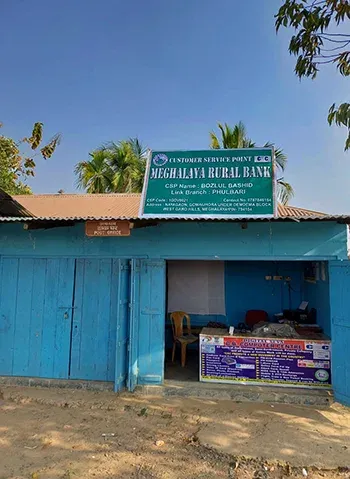
A Customer service point for Meghalaya's RRB
Credit: CSC Meghalaya
While robust, the financial ecosystem for rural development was unequally situated across India. Especially in the Northeast, branches of RRBs and cooperative banks were thinly spread. In these areas, inhabitants of rural areas were unlikely to have an existing relationship with a financial institution, reducing the possibility of gaining credit.
To make financing possible, SF and its community partners utilized three basic levers to get financial institutions in the Northeast to support their livelihood initiatives. The first was increasing the familiarity of bankers with their potential rural clientele and the efficacy of new production techniques. The second was to work with the government and private funders to de-risk loans, making them more attractive to the financial institutions. Finally, SF worked with banks and users to create terms that would allow microenterprises to flourish.
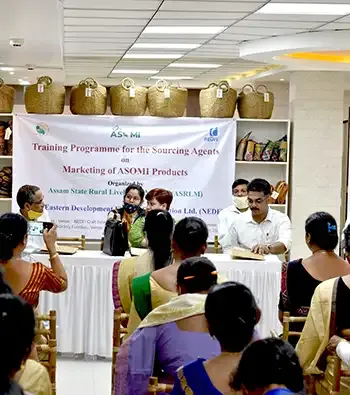
Building familiarity within the banking community was an ongoing priority. SF conducted banker training programs and sponsored visits to rural villages outside the usual territory of most loan officers. The key for SF was identifying banking champions who took the lead in providing financing and promoting microenterprises. SF found there was no better advocate to bankers than another banker.
SF had a number of options to help de-risk loans to make them more appealing to bank lending officers. The Foundation could marshal private money to provide loan guarantees to encourage bankers. SF also could work with government officials to unlock agricultural subsidies.
Most importantly, SF served as a go-between for the banks and microenterprises. If bank loans were slow to materialize or initially inadequate, SF could provide short-term gap financing, allowing the microenterprises to become operational. In addition, the Foundation helped financial institutions tailor repayment schemes to fit with rural cash flows. Bankers needed to understand that rural budgeting worked on a cash basis that might not coincide with the typical repayment cycle. Farmers benefited when loan terms considered harvest cycles. Other microenterprises required more frequent and smaller repayments according to when they received money for their goods or services.
Beyond direct interaction with bankers, aligning the financing system required ensuring that other elements of the ecosystem were in place. A SF staffer noted that even when bankers understood the technology and trusted the artisans, they needed to be certain of the feasibility of the enterprise. As one SF staffer notes, “The banker will say ‘Even if you can produce more, where are you going to sell it? If there's no one who's going to buy in that remote area, your business is not viable for me."
All in all, SF reported that their interactions with bankers was challenging but positive. “There's no active resistance from the banks,” one SF staffer reported. Both the microenterprises and the bankers were ultimately aligned in terms of incentives. Microenterprises needed financing and the bankers wanted to build their local loan portfolios to deliver on their mandates to aid rural development. Once connections were made and loans were being repaid, bankers were eager to add more of the same. For example, when MOSONiE Foundation started setting up electrified weaving operations, gaining financing was a major obstacle. But once the first weaving enterprises were running and paying back their loans, bankers were actively soliciting more business.
Test, Pilot, Scale
General Contractor
The preliminary work of creating a problem statement and ecosystem map and then developing relationships with various partner organizations set the stage for actually rolling out an intervention. The SELCO Foundation went through an extensive process of testing and piloting an intervention in order to learn what did and did not work, before trying to encourage adoption at scale. The extensive roll-out period allowed for redesigning devices to work better in the field, as well as energizing the various elements of the ecosystem.
For rolling out an intervention, SF organized its efforts into two teams, both based in the region of the intervention. The first team was geared towards action research – testing a specific technology, making design changes, and capturing lessons learned. These staffers worked closely with the community organizations, technical enterprises, and end users. They would also work to find specific champions for an intervention, identifying those individuals and organizations that would promote the technology and provide feedback about its strengths and weaknesses. The second team would coordinate with larger, ecosystem-level organizations that would be crucial in bringing an intervention to scale. This team would meet with financial institutions, other potential funders, and the relevant government agencies.
During testing and piloting of new interventions, SF acted much as a general contractor would, making sure that the various actors engaged constructively, forged connections, and provided necessary support. SF became a key hub for feedback from end-users, allowing adjustment to the design or wholesale revision to a given intervention. SF’s coordinator role allowed the Foundation to collect data from multiple locales, letting SF’s teams aggregate the results from numerous iterations of a similar intervention. Maintaining communications among teams, despite the difficulties presented by the terrain, was crucial.
Testing
When a new device seemed ready to be used in the field, prototypes were built and placed with interested microentrepreneurs across a couple of villages. Community partners were crucial in selecting appropriate microenterprises for the test phase. For a useful test, it was important to find potential champions for the new technology. SF needed these first adopters to be willing to experiment and give feedback.
SF provided support to the microenterprises during the test phase, typically bearing 90-100% of the cost of the device and the solar panels. The Foundation reasoned that it did not want poor farmers to take on costs for a technology that was not proven.
During the test period, SF, community partners, and the technical enterprise that provided the device would be in close communication. Any issues with the devices were noted and communicated to the technical enterprise, which in turn would make changes to the devices.
Piloting
After a testing phase during which a device was redesigned as needed, SF would expand the intervention to include more sites and locales. The community organizations and SF chose additional locations to provide a diversity of test conditions. As in the testing phase, SF made sure that user feedback would be given to the technical enterprises. This allowed for further modifications to meet end users’ needs.
Communications between staff members was crucial during the testing and pilot phases.
During this phase of a rollout, SF would pull back on its financing, only supporting 50% of the price of the device. This meant that microentrepreneurs would have to seek financing for the devices, which in turn engaged finance partners.
During the pilot phase, SF oversaw the engagement of other actors in the ecosystem whose long-term support would be needed for successful uptake of the new devices and the related livelihoods. Having a number of artisans take up the device allowed SF and the community partners to assess the capacity building and training requirements needed to advance and support the technology. It also allowed SF to discover whether the technical enterprise or the community partner could find the people to help support the ongoing use of the technology. SF could also assess how the goods or services produced by the new devices fared in the marketplace.
The key, once again, was to find champions for the intervention, especially ones that understood the broader ecosystem. These people could come from any sector – not only users had emerged as champions but also individuals from financial institutions, the government, and from local NGOs. These people would drive the process from inside, lining up other stakeholders, and otherwise building the ecosystem. One SF staffer observes,
The champions are able to take a program much, much further. Our entire approach is based on identifying those champions and empowering them to do what they do best... It goes much faster than investing in people who may not be as open and geared towards a systems approach.
Scaling
While the pilot phase required intense coordination from SF, the scale-up phase meant letting go of the general contractor role and trusting that the new systems in place would support an innovation and allow it to spread. The number of adopters of the new technology could then be an order of magnitude greater than that of the pilot phase.
At this point, SF eliminated its subsidy to microenterprises and relied on the financing schemes that the Foundation had encouraged to provide the necessary capital for adoption. SF continued some oversight, giving close attention to the affordability of devices and looking for ways to reduce costs to microenterprises.
As SF withdrew from supporting an intervention, the hope was that the operating ecosystem would not only sustain the intervention that inspired its creation, but also become a springboard for further innovations. Having aligned microenterprises, financial institutions, and consumer markets, SF believe the energized ecosystem could generate further development without outside intervention. This could take the form of increased production through improved market linkages or by inspiring the production of other goods and services that utilized the same ecosystem participants.
Building Market Linkages
An element of any successful intervention was ensuring that the increased production of a microenterprise’s goods and services could be sold at a price that justifies making the investment in the new devices. Part of the SELCO Foundation’s ecosystem survey was to ascertain that the demand for a particular product was sufficient.
The outputs of microenterprises vary a great deal, but they can be categorized by their target market. Some products and services are directed at a microenterprise’s fellow villagers. These microenterprises sell products and services that become interwoven with the economics of village life. Other goods, such as cash crops, are destined for markets outside the immediate area, often in urban areas in India and beyond.
Village Goods and Services
Village markets serve an important economic role in rural life.
Village microenterprises play a key part in a local area’s economy. Regular open-air markets are central not only to the economic, but also the social life of rural communities. Farmers and artisans sell their goods in these venues and community relationships are forged and reaffirmed.
Other microenterprises provide services in their immediate areas. For example, a person operating an electric rice huller not only makes it possible for more efficient processing of their own crop but also can offer the hulling services to other people in nearby areas. Village microenterprises also provide nonagricultural services such as photocopying, cell-phone-charging, or tailoring.
The selling process for such goods and services is simple and based on word-of-mouth recommendations. To gain customers, these enterprises need to introduce their goods or services to their neighbors. This is not an easy task but means that branding and advertising are not necessary. In the case of SF’s interventions, civic organization partners often act as conduits for outreach to new customers, urging residents of surrounding villages to try new services or buy goods from local producers.
Dependent as these microenterprises are on local customers, SF and their civic organization partners take care in the quantity of their initial placements of new devices and techniques, ensuring that each site will have a sufficient market. The danger in making any operation more efficient is that increased goods can reduce prices and limit or eliminate any surplus income generated.
Urban Markets
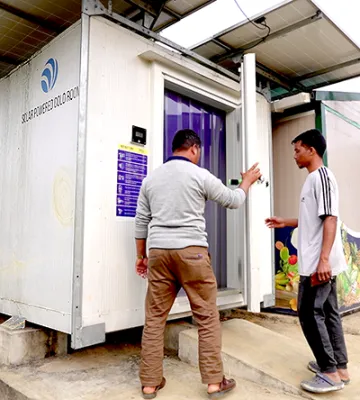
Solar-powered cold storage units allow pineapple farmers to sell their crops at a higher price in urban markets.
Artisans and farmers also produced goods destined for markets outside their immediate areas. In the Northeast, these products included commodities such as pineapples and finished goods like silk scarves. Sales of these products provided regions with an important source of funds.
Urban markets were difficult for village farmers and artisans to negotiate. Getting goods to urban markets in the Northeast was especially fraught. The terrain was rugged and prone to flooding. Roads were poorly maintained and hazardous even during periods of calm weather.
To facilitate the movement of goods from the rural areas to the cities, intermediary organizations have arisen. Often, intermediation was provided by larger companies. These companies had inherent advantages in negotiations with small farmers and artisans. They could buy during times when prices were low and sell when prices rose. These intermediaries could also process commodities at scale and brand their products.
An alternative to large companies were co-ops and Farmer Producer Organizations (FPO). These organizations aggregated the output of local farmers and artisans, sometimes providing processing and branding, in order to sell to larger urban markets. The self-governance of co-ops and FPOs meant that farmers and artisans were more likely to get a fair price for their wares (though even these kinds of organizations could suffer from elite capture, if more prosperous members dominated the organization). In many regions of India, co-ops and farmer producer organizations were dominant players in agricultural endeavors. The government had enacted many policies to encourage the development of FPOs and co-ops.
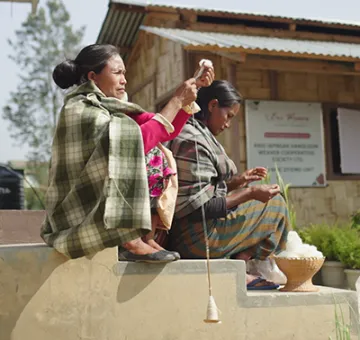
A co-op of eri silk spinners who utilize solar-powered electric spinning machines hope to market silk and woven goods internationally.
SF had helped co-ops and farmer producer organizations employ DRE devices to make their members’ goods more competitive. For example, SF provided cold storage units to allow the storage and aggregation of perishable goods. Besides the market linkages, these collective organizations had also become a way of gaining outreach to individual microenterprises for the development and deployment of DRE interventions to increase production.
However, the existence of these collective organizations in the Northeast was sparse. SF had contact with many of the ones that existed and had provided support for interventions targeted at improving their ability to operate. However, SF had not incubated new FPOs and co-ops or otherwise build market intermediaries. As the Foundation staff acknowledged, building organizations to intermediate cash crops could expose the Foundation to wide fluctuations in market prices. So, while SF worked with the few existing FPOs, the Foundation leaned toward improving the yield for crops and the promotion of livelihoods with substantial local markets.
Enlisting Government
Government agencies in India play a key role in rural economic development. In terms of livelihood promotion, government programs sought to aid microenterprises in a variety of areas and SF worked to align these programs with its efforts.
SF reported that it had very good relationships with government officials in the areas where it worked. The government and SF had similar aims in terms of promoting livelihoods in rural areas and played complementary roles to one another. Government agencies brought financial resources and staff to bear on developing rural microenterprises. However, government’s large size and diffuse operations could also impede its work. Bureaucracies move slowly; policy mandates were broadly written, and government officials could be quite removed from village life. On the other hand, SF had direct contact with community organizations, technical enterprises, and microenterprises.
In addition, SF’s process of creating interventions required time and expertise unavailable to government agencies. The Foundation could take new ideas, test them, adjust its programs, and then try again. SF believed that this slow process was essential to successful interventions, but it was one government agencies could rarely undertake. And yet, government officials needed interventions to be successful and scalable in order to fulfill their mandates.
Fine-Tuning Policy
One key policy area where SF often worked with the government was in the financing of microenterprises. The government had mandates to help rural enterprise through various financing schemes. The government could promote loans for microenterprises through government-supported banks or provide direct subsidies. SF provided advice on how to translate these programs into specific transactions that would help microenterprises.
State governments organized training institutes for various livelihoods
Government agencies often had broad mandates for economic development. SF would advise agencies on how they could achieve their targets through DRE. For example, the government could have a mandate to promote the sale of rural produce in urban markets. SF would advise the government that a key technology to support to achieve this policy goal was the development of cold storage units located in villages and that furthermore, these units needed to be powered through the use of solar panels and batteries – or otherwise the units would fail. Then SF and policy makers could strategize what mix of loans, tax breaks, and subsidies would provide the most effective level of support not just for the immediate realization of the program, but toward the long-term goal of building a sustainable industry.
SF played a similar role in helping the government structure training institutes. Many of these institutes were offered with the aim of instructing rural youth on starting microenterprises. SF’s expertise in rural livelihood development informed the creation of these programs, with SF aiding in building the curriculum. The government also supported various technical institutes and think tanks whose mission was to design and invent new devices that could aid in rural development. SF provided useful information to these innovators as to the needs of rural inhabitants as well as what ideas had already been tried.
Access
In terms of policy work, SF’s unique position within the ecosystem gave it the ability to span a gap between on-the-ground realities and policy establishment. SF had relationships with local actors, particularly small grassroots civic organizations and modest technical enterprises that worked directly with microenterprises, who would not otherwise have entrée to government. And the government’s work was enhanced by finding avenues for providing aid to the people and enterprises that they were tasked to support.
SF staff also played a role in coordinating government programs across various agencies. Government officials could become siloed, with each department overseeing a narrow program. SF staffers working across disciplines (e.g., infrastructure, livelihoods, energy access) could use their knowledge of how a particular intervention could help fulfill a number of mandates at once. For example, funding in support of a certain kind of microenterprise would also accomplish important goals in terms of renewable agriculture, if the right enterprises were targeted with the correct incentives.
In addition, SF’s policy work provided its partner organizations with the knowledge to help its local-level partners access the appropriate government resources. In many of the rural areas in which SF worked, inhabitants and civic organizations had little or no relation to national institutions and agencies. SF could help translate government policies and guide local action to provide access to these resources.
Knowledge Management
In creating the SELCO Foundation, Harish Hande’s objective was to grapple with the complex array of issues that support or impede how DRE could aid in development work. Hande had seen how other organizations had tried to implement DRE solutions in challenging contexts, focusing on the product side of the equation, and ultimately not meeting the needs of the end-user of solar energy. His experience in solar energy had showed Hande that an approach that centered on the user and built an ecosystem around an intervention would be more likely to be successful and scalable.
But from a knowledge management perspective, the ecosystem approach was difficult to administer. SF staffers faced challenges coordinating their efforts - for any given intervention, numerous partnerships with a wide array of actors had to be developed simultaneously. Knitting together these efforts, especially across rough terrain that limited communication, created difficulties.
If internal communications were hard, SF’s goal of diffusing its approach to the wider development world was even more challenging. Hande saw SF as an “action tank,” carrying out various interventions not just to aid groups of recipients, but also to provide data and insights for those interested applying in this approach in other settings. But the Foundation’s bespoke method to developing its interventions meant that every project had unique elements. Nonetheless, Hande believed that the projects could produce relevant guidelines and insights that could be utilized in other contexts – yielding “Lego Blocks” of information and practices that could be redeployed, as appropriate, in other interventions.
Defining information blocks emerging from SF’s livelihood promotion vertical presented a particular problem, since the means of procuring a livelihood ranged by area and culture. For the education and healthcare verticals, successful innovations were more readily transferred – both verticals were intent on building site-specific facilities (schools and clinics) that would have similar goals no matter their location.
But livelihoods varied greatly from region to region. Were there lessons that SF could impart from working with turmeric processors in Assam that would be applicable to, say, blacksmiths in Patna, let alone cocoa processors in the Ivory Coast? What could be transferable to other contexts? The lessons could vary in terms of their specificity. There was a broad methodology of user-centered design, ecosystem mapping, or rolling out interventions that could be imparted. But could other, more specific lessons be harnessed as well? What about technical innovations, narrative strategies, organizational structures, and business models? How could these Lego Blocks of knowledge be organized and made available to organizations that might be interested in taking a similar approach?
Another issue that prevented diffusion was the dearth of metrics. One reason for the popularity of product-oriented interventions among development NGOs was that metrics of success were easy to track – the number of solar panels installed, or the number of megawatts produced. This gave funders confidence that targets could be set and then met in a reasonable period of time. The SF approach was more nuanced and required patience for learning by trial and error, for developing the needed ecosystem partners, etc. Building relationships and incubating technologies was an uneven process that could take many funding cycles to get to a point where scalable interventions could be successfully launched. SF was backed by patient funders willing to trust the organization to find its way, but few organizations were as fortunate. Could SF provide a roadmap with appropriate metrics and milestones? Or was the process not amenable to this type of quantification?
SF had worked to make its process as transparent as possible. The Foundation’s website featured documents derived from its work – such as examples of problem statements and ecosystem reviews. SF had also created a website for the various livelihood innovations that its partners had created, providing a catalogue of devices that would work with electricity from solar panels. In a more far-reaching project, SF, in 2023, began experimenting with artificial intelligence, allowing the program to not only digest the foundation’s documents, but also allow it to record and transcribe meetings for its database. The AI program was showing promise in helping internal knowledge management. Could it also provide a useful service to those outside the foundation? What other mechanisms could be used to capture SF’s diffuse learnings and support successful adoption of a user-centric, ecosystem approach?
Determining Scope
Besides diffusing knowledge, the SELCO Foundation faced challenges with the limits of their method in livelihood promotion when transferred to other settings. SF’s ecosystem approach emphasized aligning organizations and individuals. The Foundation acted as a designer and general contractor for existing organizations and individuals on the ground. SF staffers became expert in diagnosing the gaps in the ecosystem and finding mechanisms to incentivize cooperation to support the community organizations and technical enterprises that in turn served the local artisans and farmers. SF, then, supervised an iterative process to test and adjust interventions, providing feedback to its partner organizations.
SF hoped to inspire other development organizations to take their approach to DRE interventions. However, SF discovered as it moved from its home base in Karnataka to the more impoverished regions of the Northeast that civil sector organizations and technical enterprises were far and few between. This required SF to take a more proactive role in nurturing organizations to become active elements of a given ecosystem. For example, the Foundation established an incubator for technical innovators to create devices and launch their businesses. This enlarged the scope of SF’s remit for a given intervention, requiring them to support and even build subsidiary organizations before the Foundation could play its general contractor role.
Rural areas often lack the infrastructure to build a sustainable ecosystem for DRE interventions.
In line with the organizational landscape, the depth and range of human resources in developing areas were also a continual challenge that could affect the scope of a project. Many ambitious local individuals who had talent to build on the ecosystem approach were drawn to more developed parts of the country. Conversely, less determined artisans were often content with modest gains and uninterested in expanding their roles or further developing a given ecosystem.
Limited by the existing environment of human and organizational resources, SF, sometimes, drew boundaries to limit scope. For example, the market for a microenterprise’s goods often needed to extend beyond a local group of villages. In Karnataka, there was a healthy system of farmer producer organizations (FPOs) and co-ops to help microenterprises get their goods to urban markets. In contrast, the Northeast did not have an extensive array of organizations to market goods. In response, SF focused on interventions that provided public goods for a microenterprise’s immediate area. They only intervened in intermediation with more distant markets when an existing co-op needed help. Nurturing intermediation organizations was beyond the Foundation’s scope and would pose unmanageable risks.
As SF sought to diffuse its livelihood promotion approach to other organizations, the question of scope would only become more acute - especially in regions outside India. For all of its needs, India had amassed an array of resources that could be deployed to aid in development. The country had a large technical workforce, a relatively stable financial system, and a growing cadre of individuals trained in social work. Other parts of the developing world were not as fortunate (or as farsighted). How could a fledgling development organization looking to emulate SF’s approach in a less developed social and market environment undertake this type of development work? What elements of the ecosystem approach were necessary and had to be developed before an intervention would succeed and what elements could come later? What roles needed to be handled by market enterprises, what tasks were best left to civil society organizations, and what did governments need to do? How would a designer of an intervention decide what was within scope and what stood outside?